

Product&Info
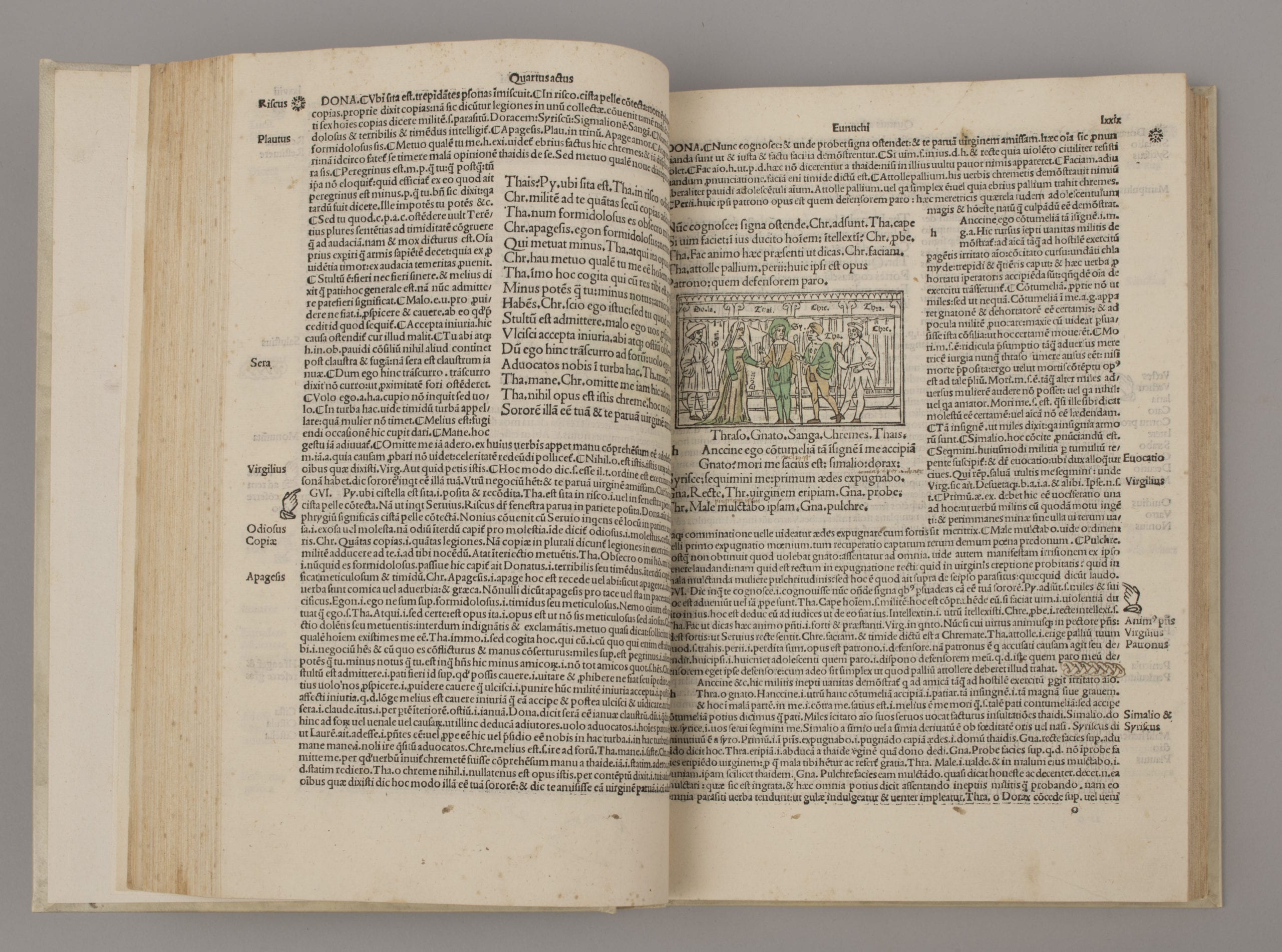
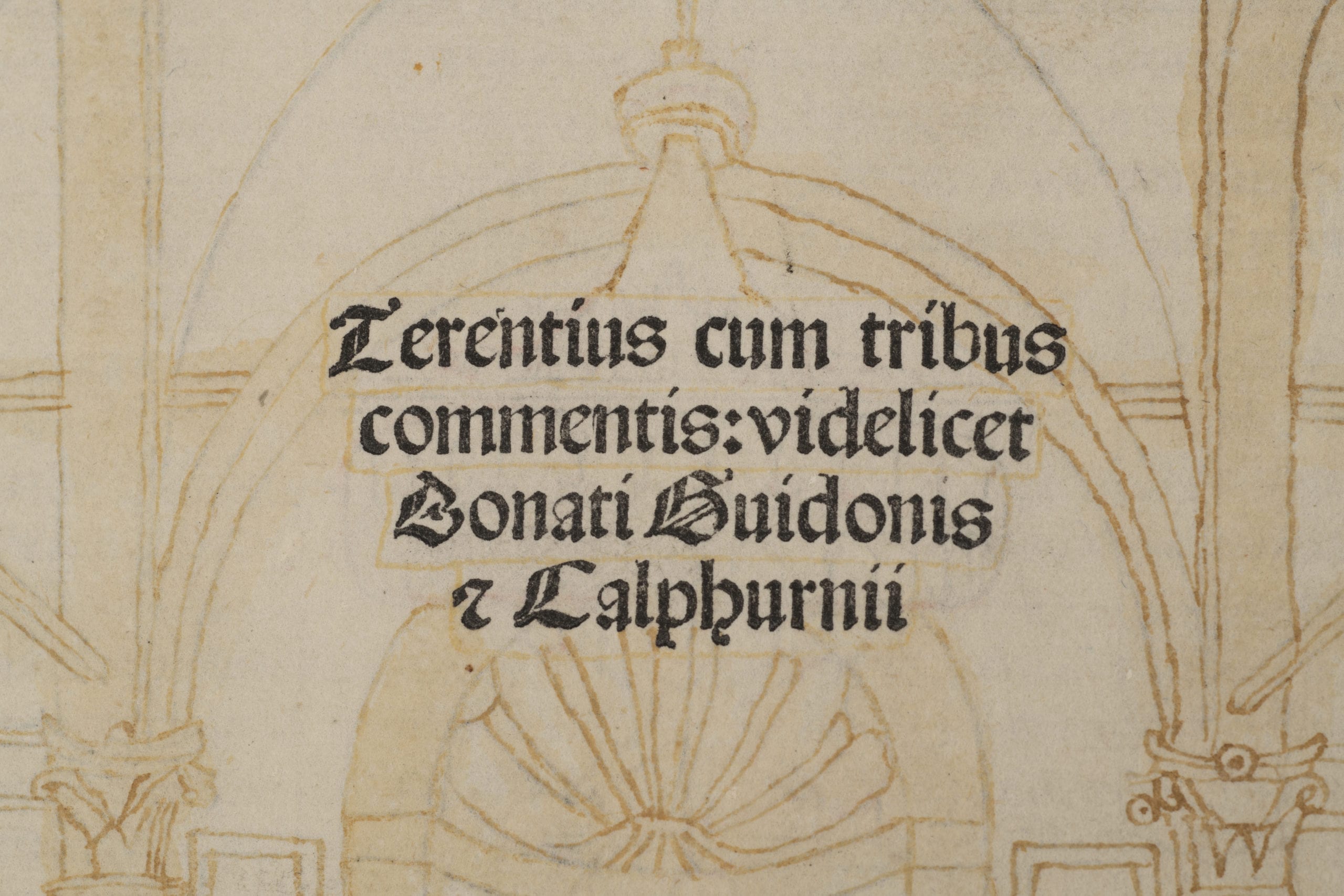
TERENTIUS Cum Tribus Commentis: Videlicet Donati Guidonis Calphurnii. 1497
20.000,00€
Do you need more information about a book?
Venice: Simon de Luere, for Lazarus de Suardis, de Saviliano, 5 July 1497
Second illustrated edition of Terence’s comedies (the first illustrated is from 1493 by Johannes Trechsel).
It contains two full-page wood-cuts, one behind the cover representing Terence crowned with laurel in the centre of a room and surrounded by six commentators corresponding to the three mentioned in the title: Donatus, Guidonus and Calphurnius, and another three: Ascensio, Servus, and a sixth unknown. Another full-page engraving on folio B iii (turned) representing the interior of a theatre in which the spectators sit on benches and an actor in the centre addresses them. There are also 143 small wood-cuts, some half coloured in a contemporary hand.
Suetonius (69-122) says that Terence was born in Carthage after the First Punic War, therefore after 201 before Christ, that he was taken to Rome as a slave of Senator Terentius Lucanus who, due to his talent, gave him a more than correct education and granted him freedom. He met Scipio and Gaius Lelius and it was rumoured that both helped him to write his comedies, which became very popular among the upper class of Rome. Terence did not want to defend himself from such accusations probably so as not to offend such illustrious characters who were flattered by the fact that such merit was attributed to them. Whether it was to escape such slander or to improve his knowledge of Greek customs, Terence set sail for Greece before he was twenty-five years old, and was never seen again.
The “editio princeps” is of 1470 in Strasbourg. The one stated here, by the Venetian printer Simon de Luere, is among the most important, both for its typographic quality and for the beauty of its woodcuts.
Terence’s comedies are certainly not completely original, since they are clearly inspired by Greek works with great coincidences.
1.- Andria. – Andros’ girl. The young Pamphilus is promised in marriage with Glycerium against the will of his father, who wanted Pamphilus to marry a daughter of Chremes. Pamphilus gives in to his father’s wishes, but then Chremes discovers that Glycerium is also his daughter and the marriage between the two youngsters takes place.
2.- Heautontimorumenos.- The one who torments himself. The young Clinia is expelled by his father and stays with his friend Philipo. Clinia is in love with Antiphilla, who turns out to be Philipo’s sister and end up getting married.
3.- Eunuchus – The Eunuch – A soldier in love with Thais gives her two slaves as present: a eunuch and a young Greek girl with whom Phaedra is in love. Phaedra disguises himself as eunuch and possesses the slave. In the end the slave is recognized as a citizen of Greece and ends up marrying Phaedra.
4.- Demipho sends his son Antipho to live with his brother, Chremes, before leaving for abroad. Antipho falls in love with a girl, Fania, who turns out to be the extramarital daughter of Chremes and, therefore, his cousin.Demipho and Chremes try to prevent the marriage between the two youngsters by hiring Phormio to marry Fania. However, Phormio uses the money to marry another woman with whom he is secretly in love. Chremes acknowledges his daughter and consents her marriage with Antipho.
5.- Hecyra – the mother-in-law. Pamphlilus has sexual relations with a woman from whom he steals a ring that he gives to his lover Bacchis. Pamphilus marries Philomena and starts a journey without having consummated the marriage. On his return he finds Philomena pregnant and gives her up. Philomena returns to her mother, Myrrina, and Pamphilo returns to Bacchis. Myrrina sees Pamphilo and Bacchis together and recognizes on her finger Philomenas ring. Pamphilo then realizes that Philomena’s son is his and returns to her.
6. Delphoe. The brothers. Demea has two sons and gives one of them, Aeschinus, to Micio for adoption. The other son, Tesipho, falls in love with a
woman and Demea does not consent to the relationship. Aeschinus, on the other hand, falls in love with another woman and his adoptive father rejects
the relationship as well. In the end, both brothers achieve their goals and marry their respective lovers.
Folio 300mm x 250mm. 240pp. Magnificent 19th century binding. Fine condition. A marvellous incunabulum.
Bibliographical Reference British Library:
https://data.cerl.org/istc/it00095000
Additional information
Related products
-

FENELON, François de Salignac de la Mothe Les aventures de Télémaque, fils d’Ulysse. Paris 1773
6.000,00€ -
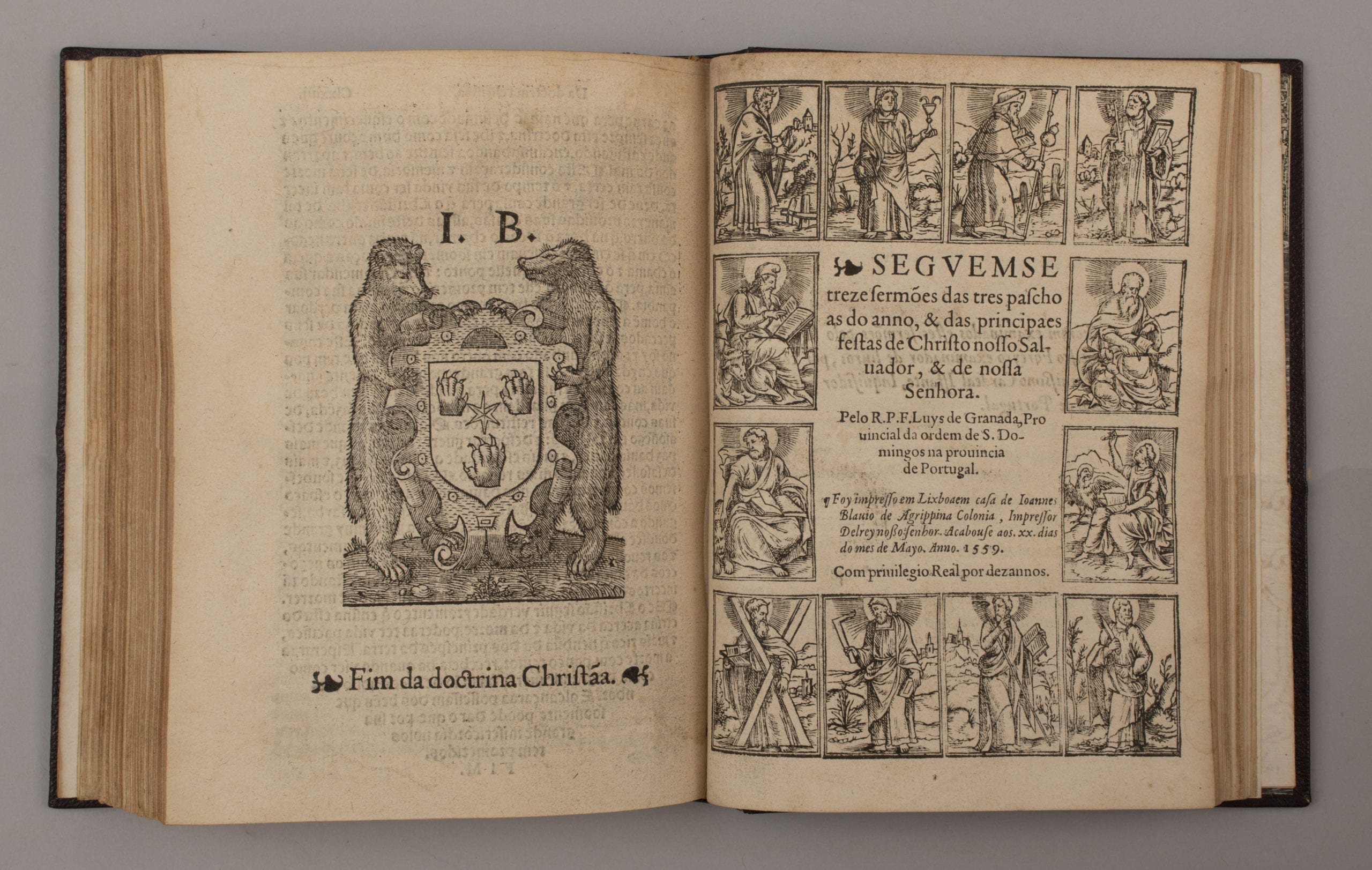
Fray Luis de Granada. Compendio de Doctrina Cristiana. Los Trece Sermones. Lisboa Joannis Blavio 1559.
-
Milton.- Le Paradis perdu. Paris: Defer de Maison neuve, 1792
4.000,00€ -
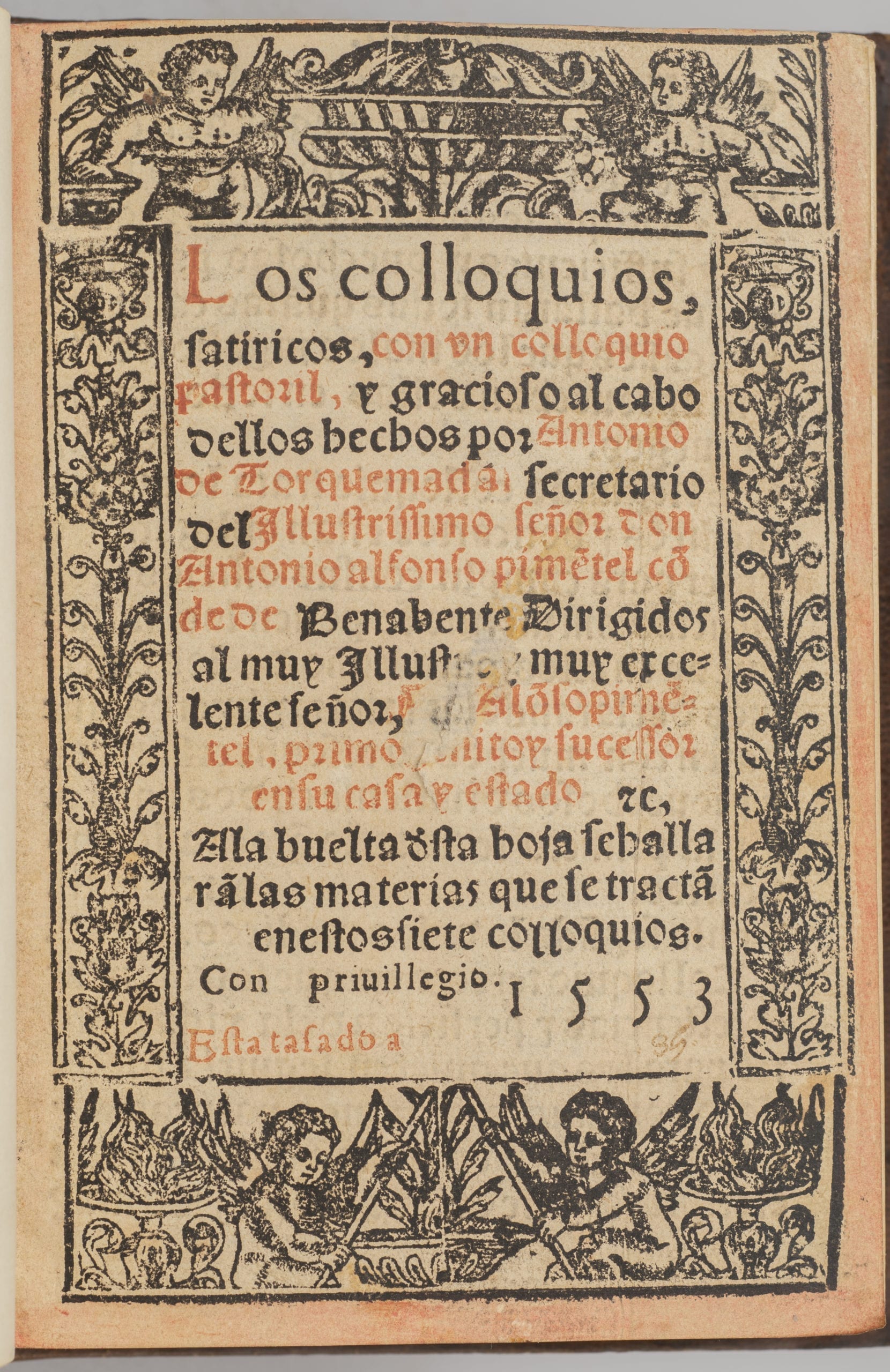
Los Coloquios Satíricos.- Torquemada. 1553
8.000,00€


Address
Núñez de Balboa, 54
28001 – Madrid
Social
Contact Us
+34 630885388
balboararebooks@gmail.com
Reviews
There are no reviews yet.