

Product&Info

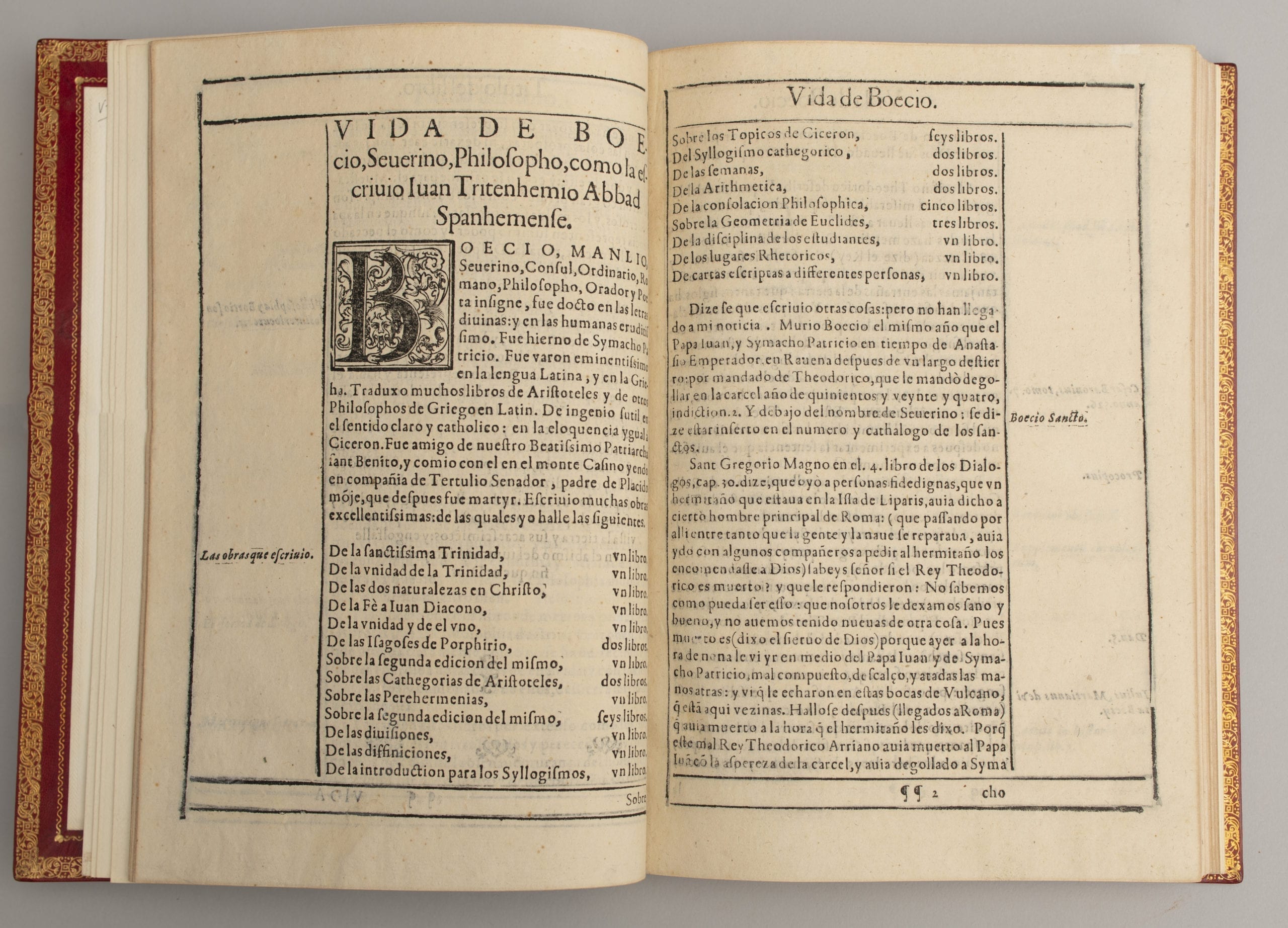
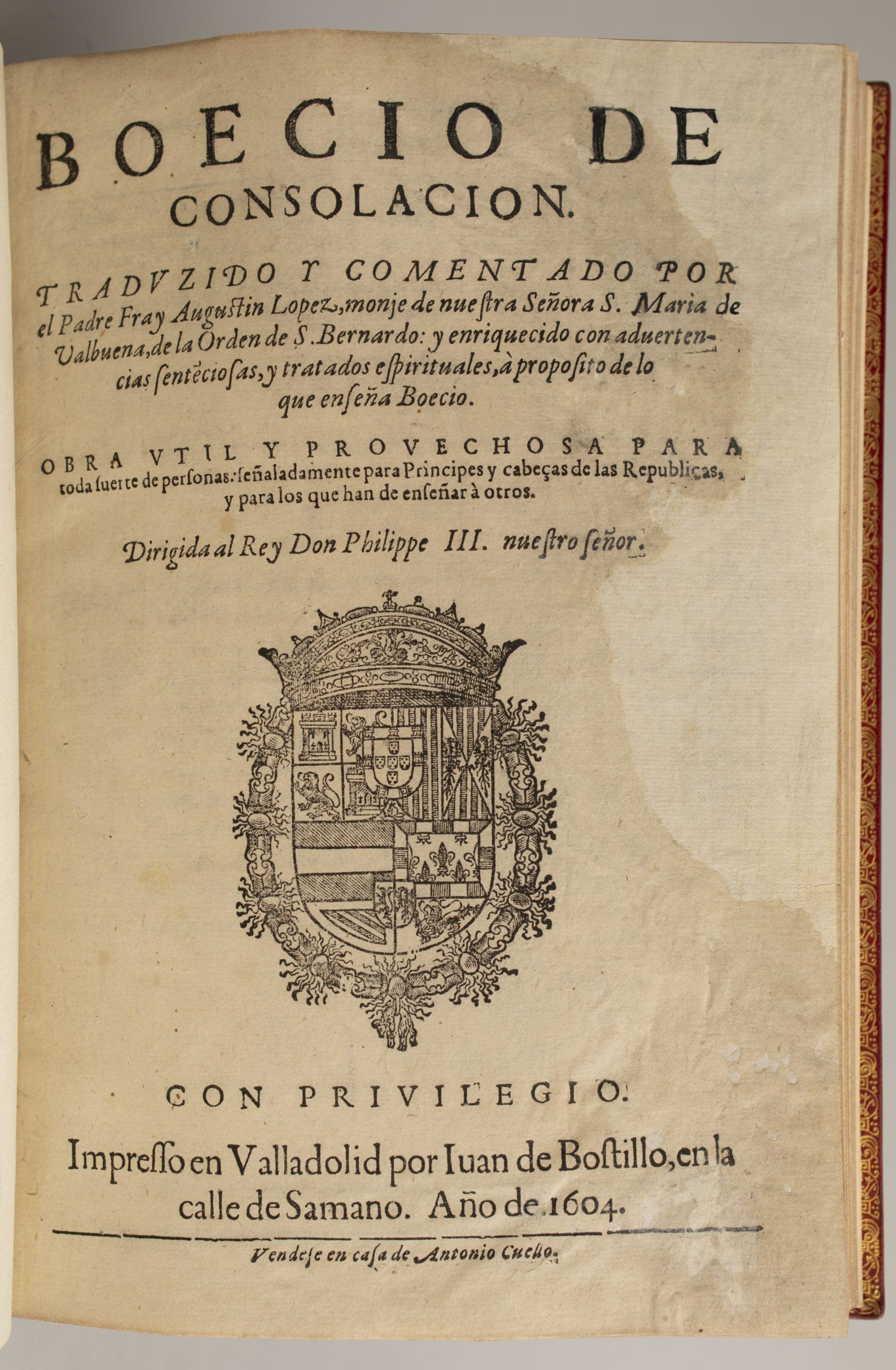
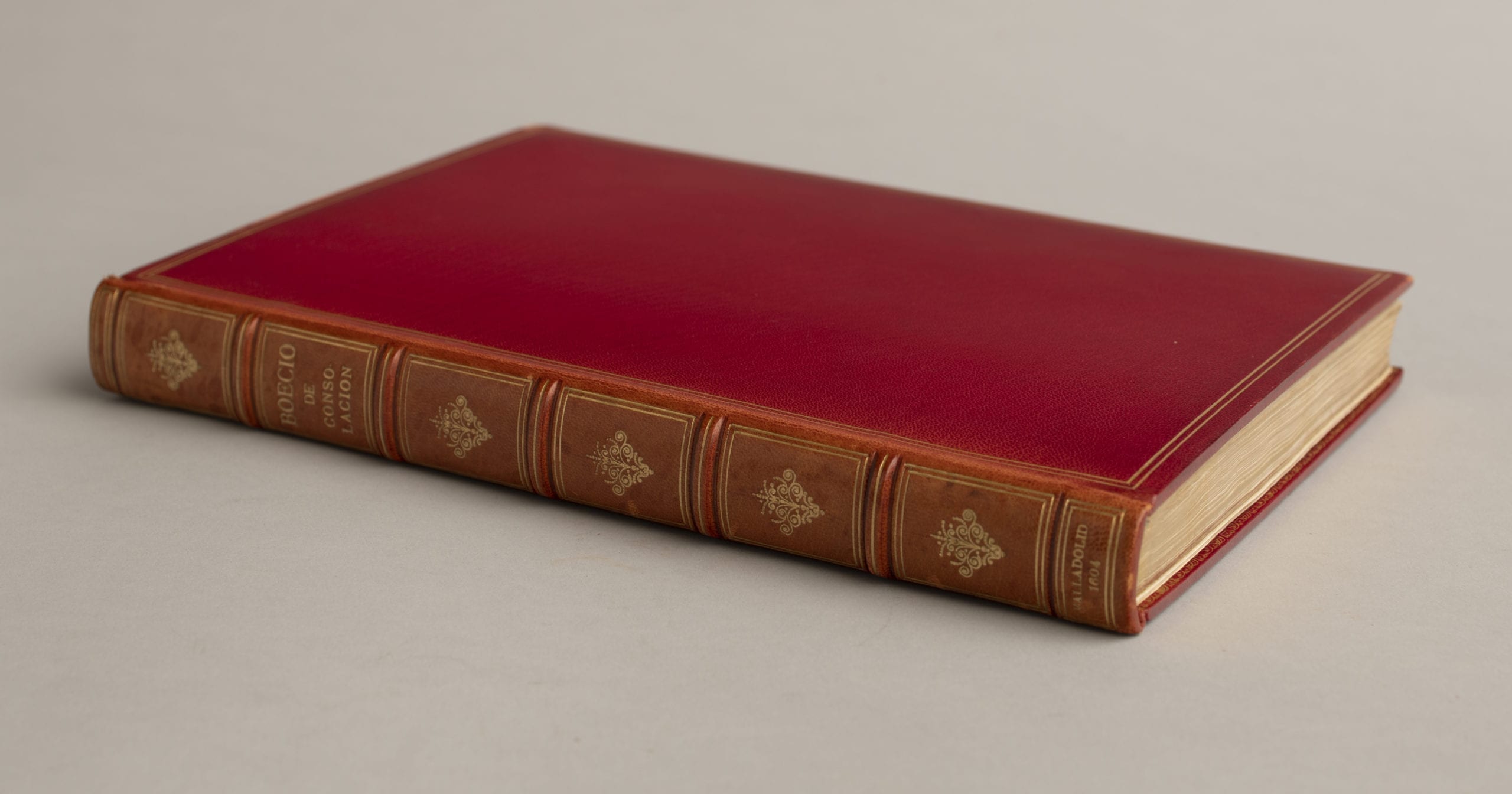
Boecio de Consolación. 1604
3.000,00€
Do you need more information about a book?
Boecio de Consolación. Traducido y comentado por el Padre Fr. Agustín Lopez, monje de nuestra Señora S. María de Valbuena de la Orden de S. Bernardo. Y enriquecido con advertencias sentenciosas y tratados espirituales a propósito de lo que enseña Boecio.
Valladolid por Juan de Bostillo, 1604.
“Como estuviese yo en silencio rumiando conmigo mismo estas cosas y escribiese y pintase como con pincel en mi corazón la querella que provocaba a lágrimas y sollozos, me pareció que vi una mujer sobre mi cabeza, con un rostro sobremanera reverendo y venerable, los ojos encendidos, claros y perspicaces sobre los ojos de todos los hombres … Entonces la mujer se me acercó, y sentándose a los pies de mi cama y mirando mi rostro hinchado del llanto y clavado en la tierra por la tristeza, formo queja de la perturbación de mi alma con estos versos: …”
“As I was silently pondering these things with myself, and writing and painting in my heart the grievance that brought tears and sobs, I thought I saw a woman over my head, with a most reverent and venerable face, her eyes burning, clear and sharp in the eyes of all men … Then the woman came to me, and sitting at the foot of my bed and looking at my face swollen with tears and nailed to the ground with sadness, she formed a complaint of the disturbance of my soul with these verses: …”
This is the beginning of Anicius Mānlĭus Torquātus Severinus Bŏēthius´ most famous work: “De Consolatione Philosophiae” written in prison between 523 and 524.
It comprises five books in which, alternating prose and verse, a dialogue between the author and his visitor, Philosophy, takes place .
In book I, Boethius explains the reasons for his despair, and Philosophy, who appears to him in the form of a lady of majestic bearing, makes him see that his grievance is because of having forgotten what is the true purpose in life of man.
Book II deals with the concept of fortune, both good and bad, and its consequences.
In book III, Philosophy states that every man seeks happiness by the most diverse paths such as wealth, beauty, success, or power. Man naturally wants happiness, but we can only achieve it through God, the universal and supreme good.
Book IV tries to explain the existence of evil and how it can be reconciled with the concept of God.
And book V explains how to make human freedom compatible with the concept of an all-powerful God, analyzing time and eternity.
Although Boethius does convey a solely religious conception of life, he largely inspired Western Christian literature and philosophy from the eighth to the fourteenth century, linking Christianity and pagan thought.
Dante, Petrarch and Boccaccio were clearly influenced by Boethius’ thought.
Boethius was born in Rome around 480 and died in Pavia between 524 and 526.
As a philosopher he is a clear representative of Neoplatonism, although influenced by the Stoics and St. Augustine of Hippo. He was, without doubt, one founder of Christian philosophy. His vast knowledge of Greek enabled him to embark on translating into Latin all the works of Plato and Aristotle and to attempt to unify both philosophical schools into one.
He has been described as the last representative of ancient Roman culture and the first of medieval intellectuals.
He had an important political career, was consul in 510 and in 522 he was appointed “magister officiorum” of the Ostrogothic King Theodoric the Great who ruled over a very large territory comprising Spain, Italy, Mediterranean Gaul and the Danube.
The “magister officiorum”, was an intermediary between the king and the civil service, of a slightly lower rank than the prefect of the praetorium, but above the quaestor, and whose functions overlapped in some matters with theirs. In the words of Helen Barrett, the post of magister officiorum “included duties that in a modern state would be discharged, some by the Minister for Foreign Affairs, some by de Home Secretary and other by the Postmaster-General. The Master of Offices was also chief of the whole Civil Service and head of the Palace officials”(Antonio Doñas).
It was precisely his political success that earned him the accusation by his opponents of conspiring in favour of the Byzantine Empire which led to his imprisonment and death sentence in 524. It was during his last stay in prison that the fruit of his meditations crystallized into “De Consolatione Philosophiae”, starting from a situation of finding himself on the brink of death he reaches through philosophical thought the peace of mind necessary to the last trance with total integrity.
The work was first printed in 1476 in Nuremberg by Anton Koberger, who made new prints in 1483, 1486 and 1495. There are also early editions in Genoa (Jean Croquet 1480), Toulouse (Johannes Parix 1481), Cologne, Louvain, Strasbourg … It was translated into all the cultured languages.
The first Spanish edition was printed in Toulouse by Enrique Meyer in 1488, followed by the Seville edition of 1497 by Ungut and Polono, another of the same printers in 1499. There was an edition from Salamanca in 1511, two more in Seville by Jacobo Croberger in 1518 and 1521, one more in Medina del Campo in 1542, the one from Valladolid in 1598 and the one offered here, also from Valladolid in 1604.
Dedicated to King Felipe III. Bound in red leather (20th century). 18,5 cm x 27 cm. Front page very well restored affecting one letter. 28 pp, 362 pp, 32 pp. Except for the said restoration, this copy is in very good condition.
Additional information
Related products
-

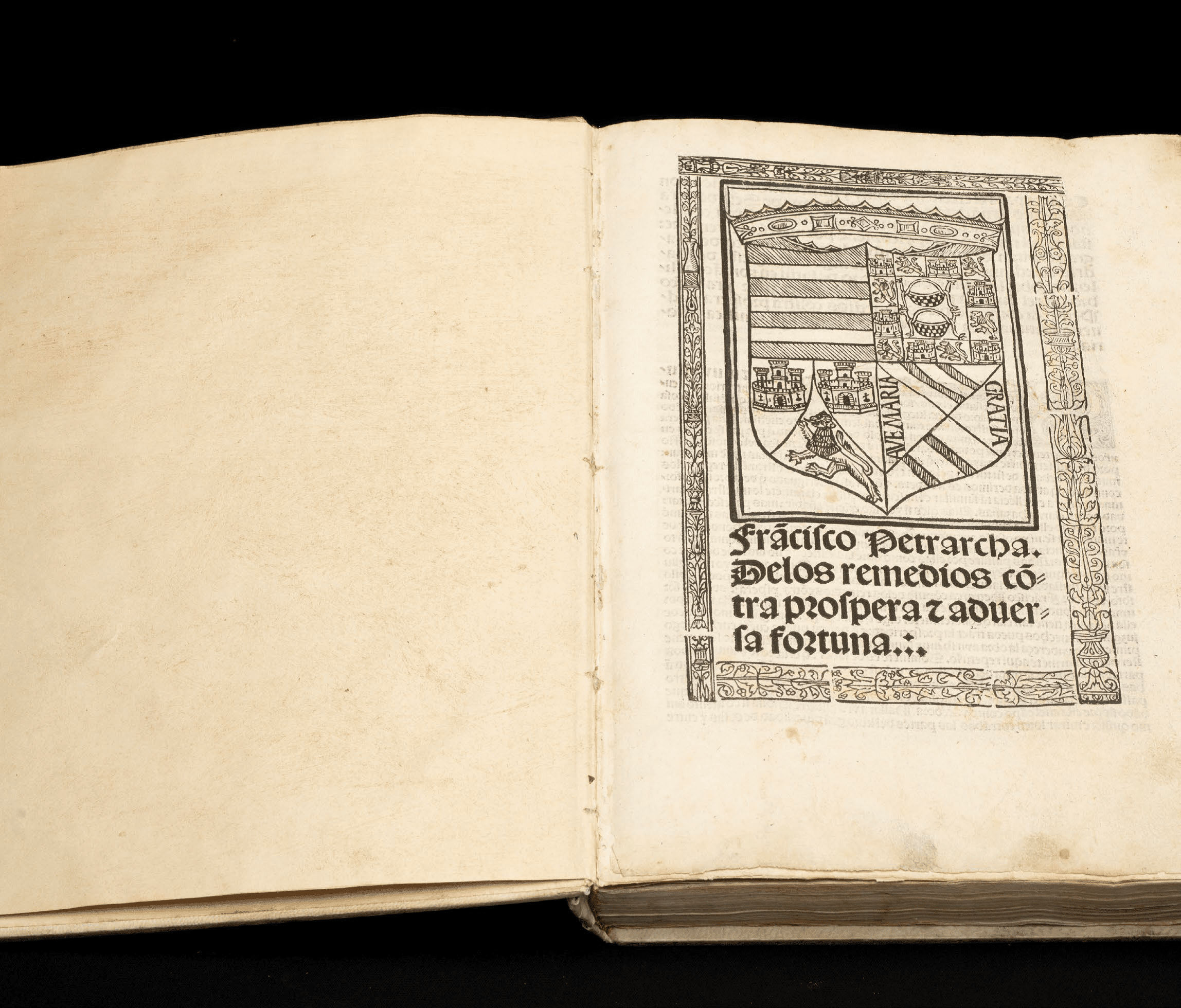
PETRARCA, Francesco.- De los remedios contra próspera y adversa fortuna. 1516
18.000,00€ -
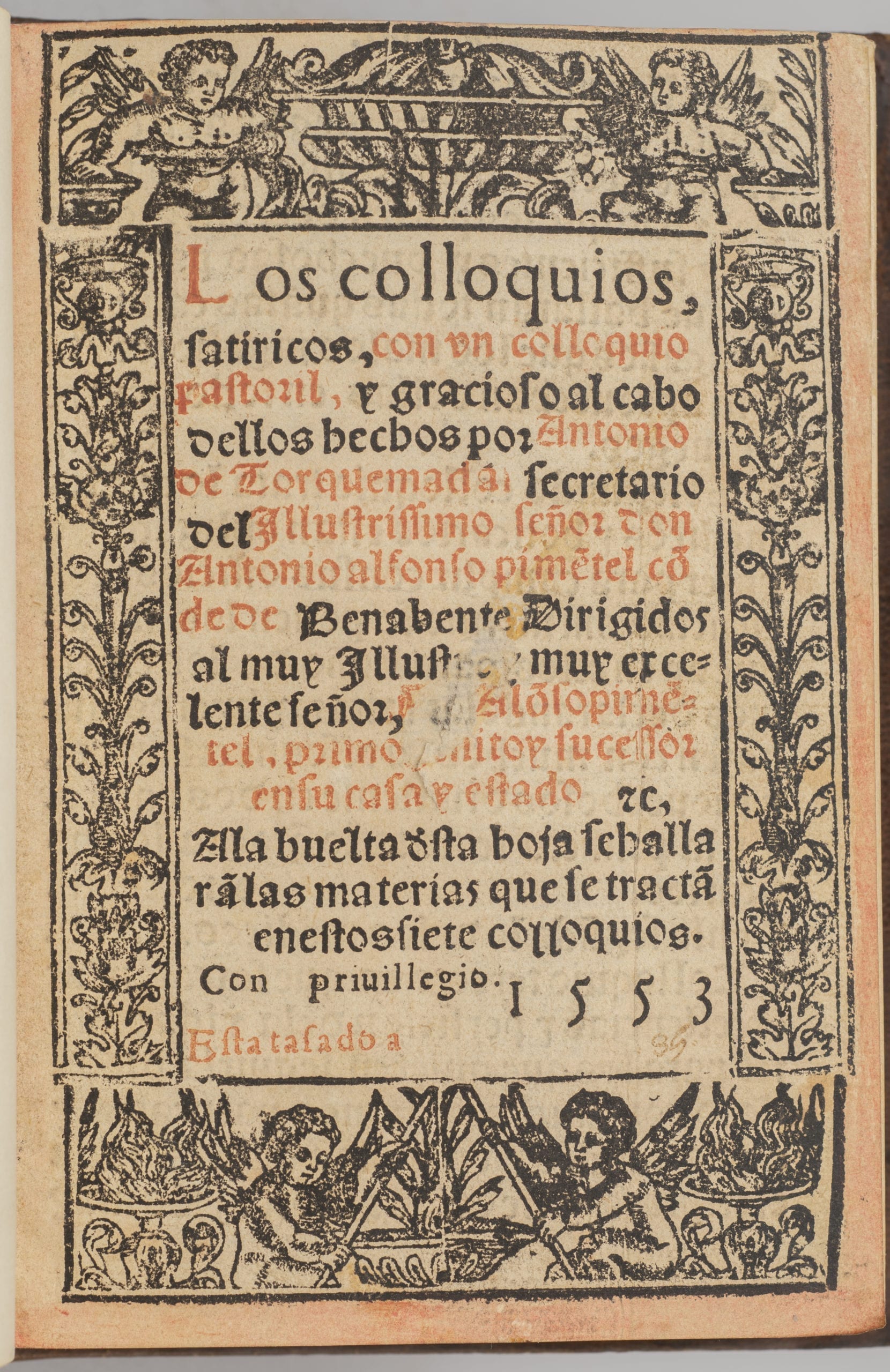
Los Coloquios Satíricos.- Torquemada. 1553
8.000,00€ -
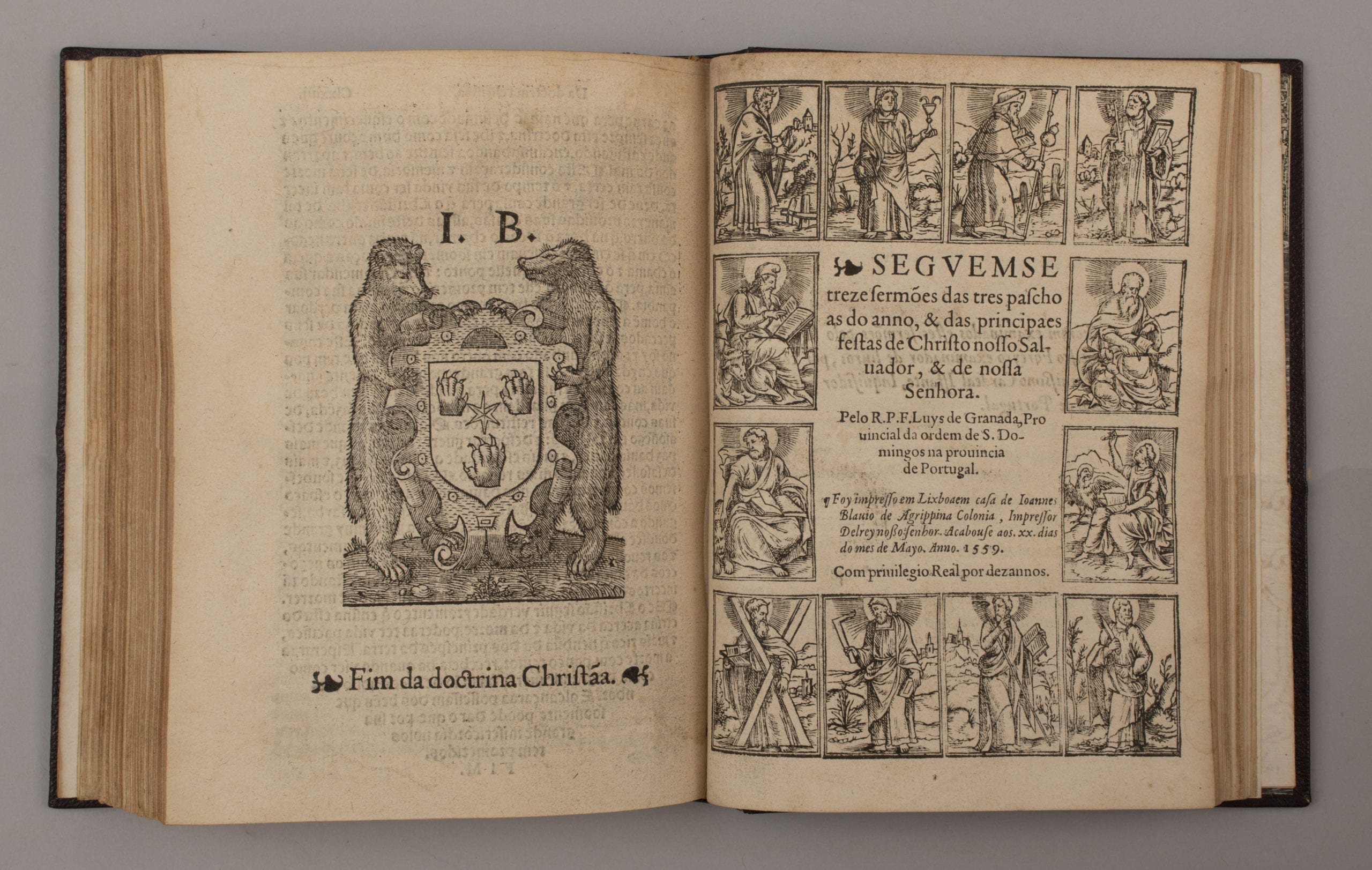
Fray Luis de Granada. Compendio de Doctrina Cristiana. Los Trece Sermones. Lisboa Joannis Blavio 1559.
-
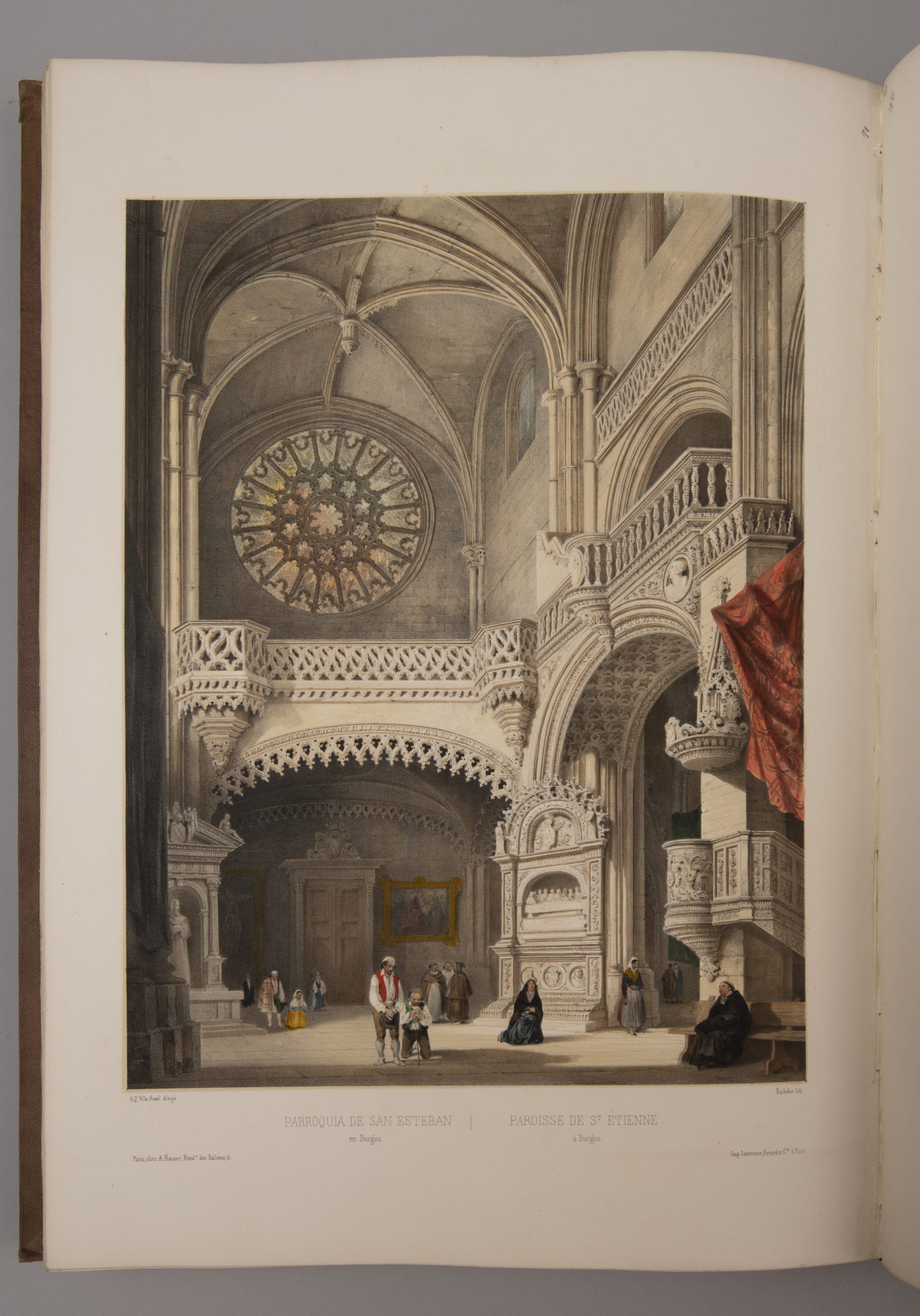
Pérez Villa-Amil. España artística y Monumental. 1842 – 1850
Address
Núñez de Balboa, 54
28001 – Madrid
Social
Contact Us
+34 630885388
balboararebooks@gmail.com
Reviews
There are no reviews yet.